AI will not wake up one morning and decide to take over the world, but it is already causing real harm to real people — just not the kind you see in movies.
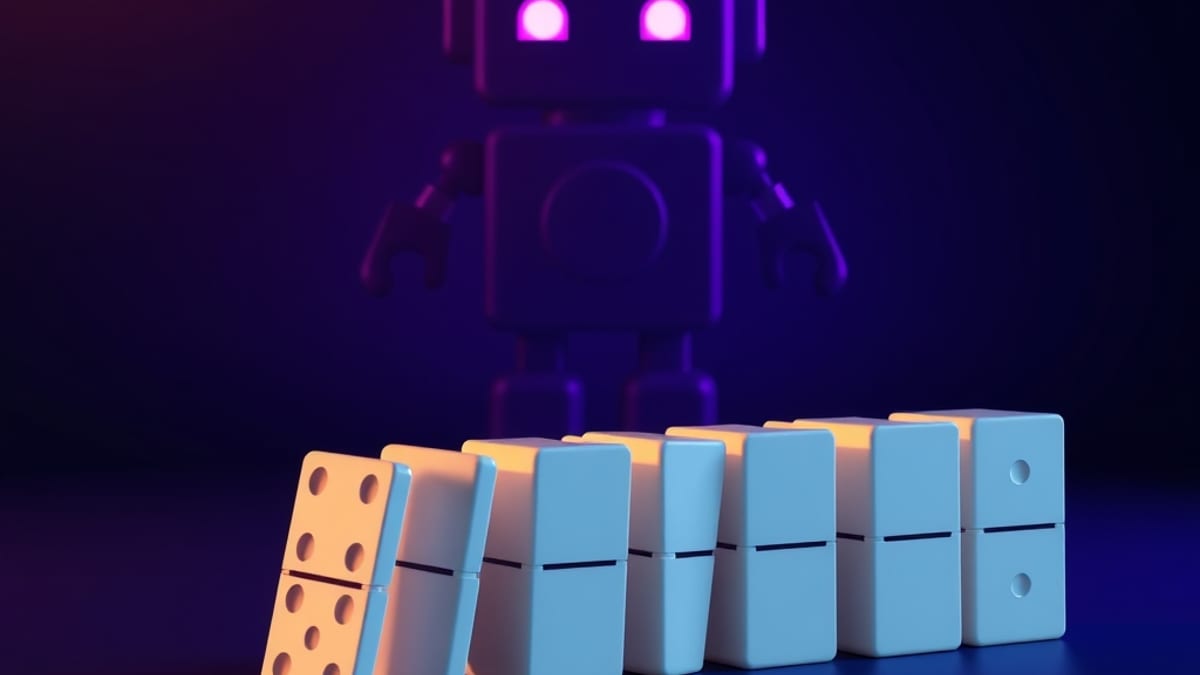
The honest answer splits into two separate questions that get mashed together constantly: a sudden, deliberate takeover by a conscious machine (very unlikely, and not what serious researchers worry about) and gradual harm from AI systems doing narrow jobs badly or unfairly (already happening, documented, and worth your attention).
If you only wanted the short version, that is it. The rest of this answer explains why the two questions get confused, what the actual harm channels look like, and where the limits of my confidence sit.
The first thing to untangle is what "take over" even means. Today's AI systems, including the ones you use daily, are narrow tools. A large language model predicts the next chunk of text; it has no goals, no memory between sessions unless a company deliberately stores one, and no body.
The sci-fi scenario requires something called "agency" — a system that pursues goals across time and resists being switched off. That is a research question, not a current feature. The more grounded concern is what researchers call the alignment problem: as systems get more capable at narrow tasks, they can cause large effects in domains where mistakes are expensive.
A model that misjudges who qualifies for a loan, or that confidently invents a medical claim, does not need to be conscious to hurt someone. It just needs to be trusted more than it deserves.
So what does real AI harm actually look like? It tends to arrive through four channels, and none of them involve a robot rebellion. First, biased decisions: if a hiring or lending system learns from historical data that already excluded certain groups, it will reproduce and scale that exclusion.
Second, misinformation at speed: a model that generates plausible-sounding falsehoods can flood a topic faster than any human fact-checker can respond. Third, privacy erosion: when you paste a confidential email into a chatbot, you may be handing over data that the vendor's terms allow it to review or use for training.
Fourth, over-reliance: people trusting AI output in medicine, law, or engineering without verifying it. Notice that three of these four are about humans misusing or over-trusting the tool, not the tool deciding anything. That is the pattern.
According to our AI tool database, which tracks 360 AI tools with a pricing and capability snapshot recorded at verification time, the variation between tools is enormous — some are built with strong privacy defaults and some are not, which means the harm you are exposed to depends heavily on which specific tool you pick and how you configure it.
Here is a concrete example that shows how the harm channel works in practice. Suppose a small company uses an AI writing assistant to draft rejection emails to job applicants. The model is fine at grammar.
But if the company also feeds it a spreadsheet of past hiring decisions to "learn our tone," and those past decisions skewed against older candidates, the assistant will quietly reproduce that skew in thousands of emails — faster and more consistently than any human ever could. No takeover required.
The harm is real, it is measurable, and it is caused by a human decision to trust an unverified system with a high-stakes task. The fix is boring but effective: keep AI out of decisions that affect people's livelihoods unless a human reviews every output, and never train a model on historical data you have not audited for bias first.
Now the limits, because this is where most articles get dishonest. I cannot tell you the probability of a future takeover scenario — nobody can, and anyone quoting a precise number is guessing. The serious research on existential risk is speculative by definition, which does not make it worthless, but it does mean you should treat confident predictions in either direction with suspicion.
What I can tell you is that the harms happening now are documented and addressable. The practical decision rule is this: if a tool trains on your inputs, treat everything you type as public and never enter confidential material; if it only retains your history for your own convenience, you can use it for sensitive work but should still review what it stores and delete it periodically.
That distinction between training-use and retention is the single most useful thing to check on any tool's settings page, and most people never look. If you want to go deeper on protecting yourself while still using these tools, the practical steps are covered in How to Use AI With Your Privacy Intact.