AI writing sounds robotic because the model is predicting the most statistically likely next word rather than choosing the word a specific person would actually use, and the fix is to give it concrete details, a real voice, and a reason to be specific instead of asking it to "write well."
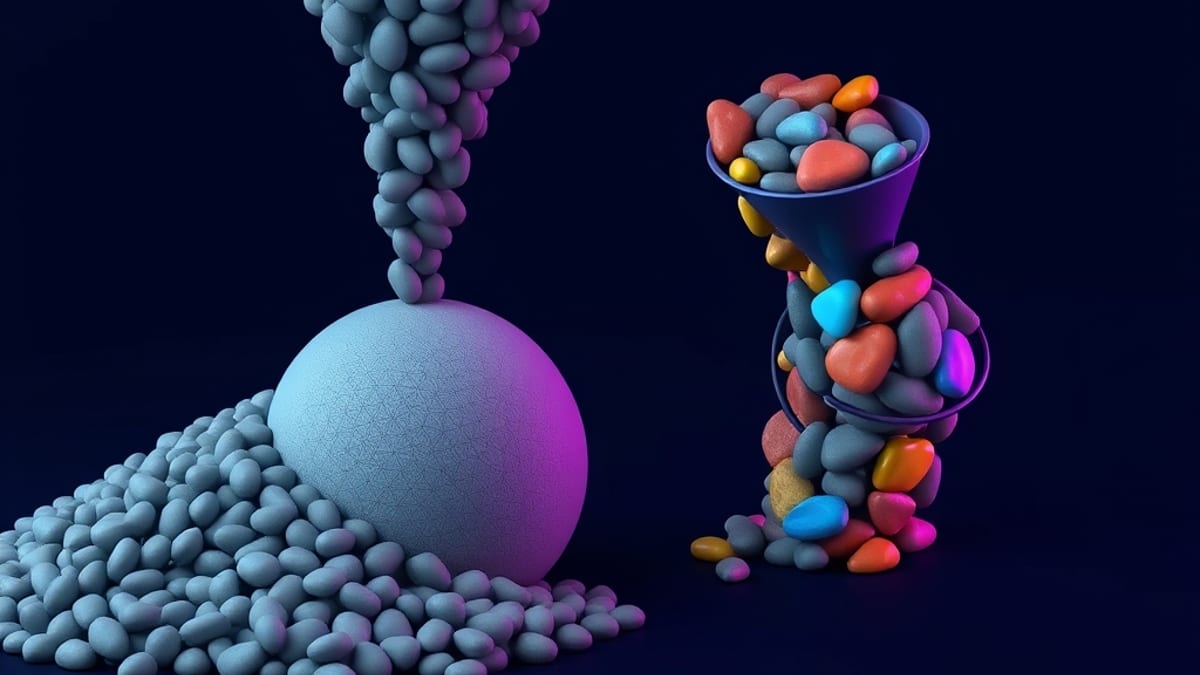
The robotic feel is not a bug in the AI's grammar — the sentences are usually clean. It comes from the model's habit of reaching for the safest, most average phrasing available, because average phrasing is what shows up most often in the text it learned from. When you ask for "a good email to a client," you get the most generic client email imaginable, because that is the center of the distribution.
Your actual client, your actual history, and your actual reason for writing are all missing.
The mechanism behind this is worth understanding, because it tells you exactly which dials to turn. Language models generate text one token at a time — a token is a chunk of a word — by assigning probabilities to what could come next and sampling from the likely options. High-probability words tend to be common, safe, and forgettable: "leverage," "seamless," "in today's fast-paced world."
That is why so much AI text has the same rhythm. It also explains why the output gets more robotic the vaguer your request is. A prompt like "write about our new product" gives the model almost no anchor, so it drifts to the statistical average.
A prompt packed with specifics narrows the probability space, and narrow space produces distinctive language. The robotic tone is really a symptom of low information in the request, not a permanent property of the tool.
Here is a concrete worked example you can copy. Suppose you want a follow-up email after a sales call. The weak prompt is: "Write a follow-up email to a client after a demo."
The output will almost certainly open with something like "I hope this email finds you well" and close with "Please don't hesitate to reach out." Now try this instead: "Write a follow-up email to Dana, who runs a 12-person accounting firm. We demoed the invoice tool on Tuesday.
She said her biggest worry is that her staff will resist switching. Keep it under 120 words, no greeting clichés, and lead with her concern, not our features." Same tool, same day, completely different result.
The second version is not robotic because it has a person, a number, a specific worry, and a constraint. You gave the model something to be specific about.
A second fix that works well is to ban the phrases you keep seeing. Models lean on a small set of crutch words, and once you notice yours, an explicit instruction like "do not use the words seamless, leverage, robust, or 'in today's world'" removes them. It sounds crude, but it forces the model to pick a different path, and different paths are where human-sounding writing lives.
Our AI tool database lists writing assistants such as Grammarly, which offers context-aware style adjustment for academic, business, and email tones, and QuillBot, which runs a free tier alongside a paid plan. Those tools are useful for catching the crutches after the fact — Grammarly's style modes can nudge a stiff sentence toward a more natural register — but they polish tone; they cannot invent the specific detail that makes a sentence feel like a real person wrote it.
That part is still your job. The honest limit here: this approach costs you time. A richly detailed prompt takes longer to write than a lazy one, and if you are producing hundreds of near-identical pieces, the specificity trick stops scaling and you are back to generic output.
It also fails when you do not actually know the details — no prompt can rescue a request you cannot make concrete. And no amount of prompting makes AI writing pass as a specific human's voice over a long document; consistency of voice across thousands of words is where the robotic seams show most.