An AI model is the trained mathematical pattern-recognition system that does the actual work when you type a prompt — it is the engine, not the app you see on screen, and different "versions" exist because the same engine gets retrained, resized, and tuned for different jobs.
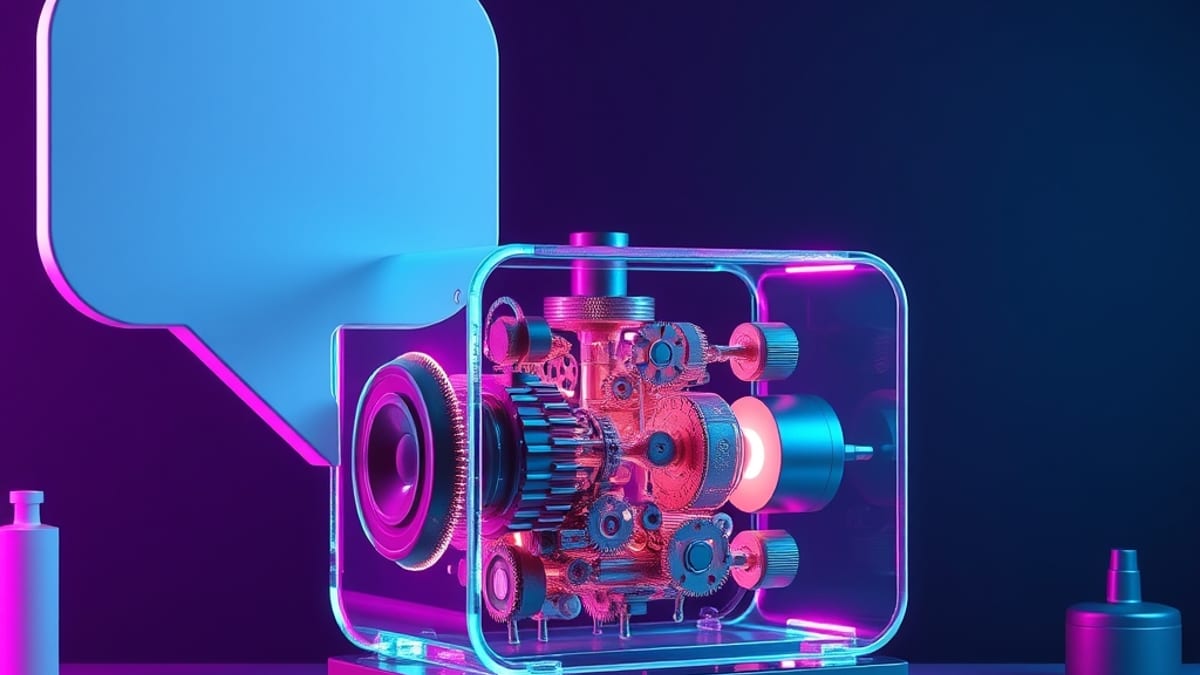
When someone says "the new model is better at coding," they mean the underlying engine was trained on different material or adjusted in a way that shifted its strengths.
The chat window, the buttons, the subscription page — none of that is the model. The model is what turns your words into a prediction about what words should come next, over and over, fast enough to feel like a conversation.
The easiest way to picture this is a very well-read autocomplete. A model is trained by showing it enormous amounts of text and adjusting millions or billions of internal settings until its guesses about the next word get better. Those settings are called parameters, and they are the closest thing AI has to memory of what it learned.
A bigger model has more parameters, which usually means it can hold more subtle patterns — but it also costs more to run and responds more slowly. That trade-off is why you see small, fast models and large, careful ones sitting side by side instead of one model winning everything.
Versions matter because training is not a one-time event. Companies release updated models the way phone makers release new handsets: the old one still works, but the new one handles more cases, follows instructions more tightly, or makes fewer obvious mistakes. A model trained mostly on general web text will happily chat about history but may fumble a niche programming language.
Retrain it with more code and it gets sharper there — and possibly a little worse somewhere else. This is why two tools that both claim to "use AI" can feel completely different in practice. If you want a deeper look at how that plays out in real work, the breakdown of why generative AI coding tools work great for some people and completely fail for others is worth reading.
Here is a concrete example. Suppose you ask two models the same question: "Summarize this contract in plain English." A general-purpose model might produce a decent summary but miss a clause about automatic renewal. A version fine-tuned on legal documents is more likely to flag that clause, because its training nudged it toward noticing contract structure. Same task, same prompt, different engine — different result.
A useful tip that goes beyond the basics: when a tool feels worse than it did last month, check whether the model changed underneath you. Many products silently swap in a new version, and old prompts that relied on a specific quirk can stop working. Pinning a version, when the tool allows it, keeps your results stable.
Also remember that "newer" does not automatically mean "better for your task." A smaller, faster model is often the smarter choice for simple jobs like reformatting text or drafting routine emails, while the heavy model earns its cost on messy reasoning tasks. According to the AI-Mind AI Tool Database, which tracks 360 AI tools with pricing and capability snapshots recorded at verification time, the model behind a tool is one of the details that changes most often between checks — so a comparison you read six months ago may describe a different engine than the one running today.
That is not a reason to distrust the tool. It is a reason to re-test it on your own work rather than trusting a stale review. Finally, do not confuse a model with the data it was trained on.
The model is the pattern; the training data is the raw material. Two companies can train on overlapping public text and still end up with very different models because of how they tuned them afterward. That tuning step, often called fine-tuning or alignment, is where a lot of the personality and reliability differences come from.
If a model refuses a reasonable request or answers in an oddly stiff way, you are usually seeing tuning decisions, not a lack of knowledge. Understanding that distinction helps you choose the right tool instead of blaming yourself for a bad prompt.